Certified and Compromised: How Security Audits Became a Performance for Paying Customers
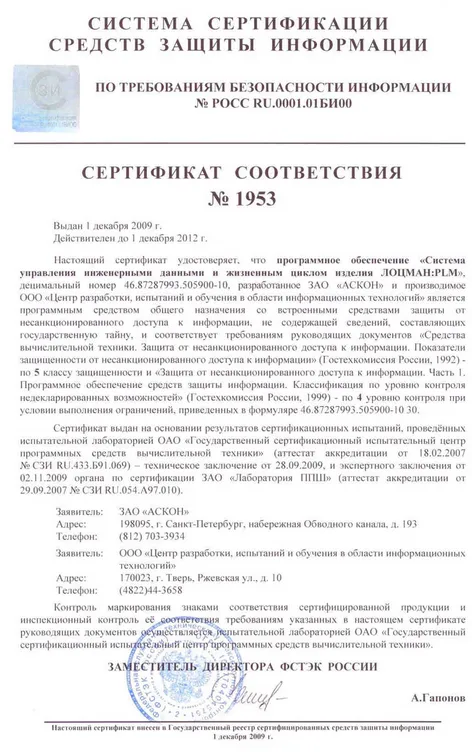
Photo: DimaKB, CC BY-SA 4.0, via Wikimedia Commons
There is a particular kind of theater that plays out every year inside mid-size and enterprise technology companies across the United States. The stage is a conference room. The audience is a rotating cast of third-party auditors carrying checklists. The script has been rehearsed for weeks. And when the curtain falls, the company walks away with a certificate — SOC 2 Type II, ISO 27001, PCI DSS — that it will display prominently in sales decks and vendor agreements as proof that its software is trustworthy.
What those certificates rarely reflect is what developers in those same companies already know: the vulnerabilities are still there. They were there before the auditors arrived. They will be there long after the auditors leave.
The Audit Window Problem
The mechanics of how compliance audits function in practice create a structural loophole that sophisticated organizations have learned to exploit with precision. Most third-party audits are not surprise inspections. They are scheduled engagements with defined scope windows — often negotiated in advance between the company and the auditing firm, which, it bears noting, is also being paid by the company under review.
Developers who have spoken with WhistleDev describe a predictable pattern: in the weeks leading up to an audit, internal communications shift. Tickets that have languished in backlogs for months suddenly receive attention — not because the underlying vulnerabilities are being fixed, but because they need to appear actively managed. Comments are added. Status labels are updated. Assignees are shuffled.
"We called it audit theater prep," said one backend engineer who worked at a fintech company in the Chicago area before departing last year. "Two weeks before the SOC 2 window opened, my manager would send around a list of Jira tickets that needed to 'look alive.' Nobody was actually fixing anything. We were dressing the set."
Once the audit window closes, those tickets frequently revert to dormancy. The underlying issues persist in production. The certificate, however, is valid for another year.
Cherry-Picked Repositories and Scoped Blindness
Beyond the timing manipulation, multiple developers have described a more deliberate form of audit management: controlling which codebases auditors are permitted to examine.
Enterprise software environments are rarely monolithic. They are composed of dozens, sometimes hundreds, of repositories, microservices, and internal tools. When an auditing firm arrives to conduct a code review, it typically examines a defined subset of that infrastructure — a subset that the company itself often helps define.
"Our security team had a list of repos that were always in scope for the audit and a much longer list that never were," recounted a senior DevOps engineer who previously worked at a healthcare technology firm subject to HIPAA compliance requirements. "The repos that never got touched were the ones everybody knew were a mess. Legacy authentication code. An internal admin panel that hadn't been updated since 2017. Nobody wanted those looked at, so nobody put them on the list."
This practice is not technically fraudulent in every instance. Audit scopes are often legitimately limited by time and resource constraints. But when scope decisions are driven by a desire to conceal known vulnerabilities rather than by reasonable prioritization, the resulting certification becomes something closer to a misrepresentation — a document that implies a level of systemic security the organization has never actually achieved.
The Auditor Incentive Problem
To understand why auditing firms so frequently accept the terms companies set, it helps to examine the economic relationship at play. Third-party security auditors are, at their core, service providers competing for recurring contracts. A firm that develops a reputation for aggressive findings, expanded scope demands, or audit failures is a firm that loses clients to competitors willing to be more accommodating.
This dynamic does not require explicit corruption to produce corrupted outcomes. It requires only the ordinary operation of market incentives in an environment where the people paying for the audit are also the people being audited — and where the people most harmed by audit failures (customers, patients, end users) have no seat at the table and no visibility into the process.
"The auditing firm wants to give you a pass," said a former application security engineer who worked at a large e-commerce platform. "Not because they're dishonest people, necessarily. But because giving you a pass means you renew the contract. Failing you means you go find someone who won't."
Several regulatory frameworks have attempted to address this conflict of interest with limited success. The Public Company Accounting Oversight Board, which oversees auditors of publicly traded companies, has enforcement mechanisms that do not extend to most private technology firms. The result is a largely self-regulating compliance industry operating with minimal accountability for the quality of its assessments.
What Developers Can Do — and Document
For engineers who find themselves inside this system, the ethical calculus is rarely simple. Raising concerns about audit manipulation can feel professionally dangerous, particularly when the behavior is normalized across an organization's leadership. But developers who witness deliberate misrepresentation of security posture to auditors or customers may have both ethical obligations and legal protections worth understanding.
Documentation is essential. Developers who observe audit prep activities that appear designed to conceal rather than remediate vulnerabilities should preserve records of internal communications, ticket histories, and scope decisions through secure, personal channels — not on company devices or systems where those records can be deleted or accessed by employers. WhistleDev's previously published guidance on building pre-emptive documentation practices offers a practical starting framework.
Several federal and state whistleblower statutes may apply depending on the industry context. Companies subject to federal healthcare regulations, financial industry oversight, or defense contracting requirements face heightened legal exposure when compliance certifications misrepresent actual security conditions. Developers with knowledge of such misrepresentations may be protected — and in some cases eligible for financial awards — under frameworks including the False Claims Act and SEC whistleblower programs.
Reporting to the auditing firm directly is also an option that carries fewer immediate professional risks than internal escalation, though its effectiveness depends heavily on the firm's own incentive structure and internal processes.
The Cost of the Performance
The downstream consequences of compliance theater are not abstract. When a company earns a security certification it has not genuinely earned, that certificate travels downstream into vendor agreements, insurance underwriting decisions, and customer trust relationships. Organizations that rely on that certification to make procurement or partnership decisions are making those decisions based on false information.
When the breach eventually comes — and in organizations with known, unaddressed vulnerabilities, the breach often does come — the certified status of the compromised company does not protect its customers. It only deepens the betrayal.
The developers who understood all along that the certificate was a prop bear no responsibility for what their employers chose to do with the audit process. But they are frequently the only people inside the organization with both the technical knowledge to recognize the gap and the professional standing to describe it accurately to the outside world.
That knowledge has value. The question is whether the systems meant to receive it — regulatory bodies, auditing firms, the press — are prepared to take it seriously.